
Promote research on AI-based modeling and simulation of engineering and physical systems.
International Workshop
AI Applications for Modeling Engineering Systems and Robotics
Satbayev University invites researchers, engineers, developers, and industry professionals to participate in AIMESaR-2026, held within EUSPN-2026 in Almaty, Kazakhstan
Workshop
AIMESaR-2026
Conference
EUSPN-2026
Location
Almaty, Kazakhstan
Dates
October 28-30, 2026
Workshop Overview
AI Applications for Modeling Engineering Systems and Robotics
AIMESaR-2026 provides a focused workshop for presenting and discussing recent advances, emerging trends, and practical applications of Artificial Intelligence in engineering systems and robotics.
The Satbayev University (SU, Almaty, Kazakhstan) invites researchers, engineers, developers, and industry professionals to participate in the International Workshop on AI Applications for Modeling Engineering Systems and Robotics (AIMESaR-2026). The workshop will be held within the 17th International Conference on Emerging Ubiquitous Systems and Pervasive Networks (EUSPN-2026), October 28-30, 2026, in Almaty, Kazakhstan.
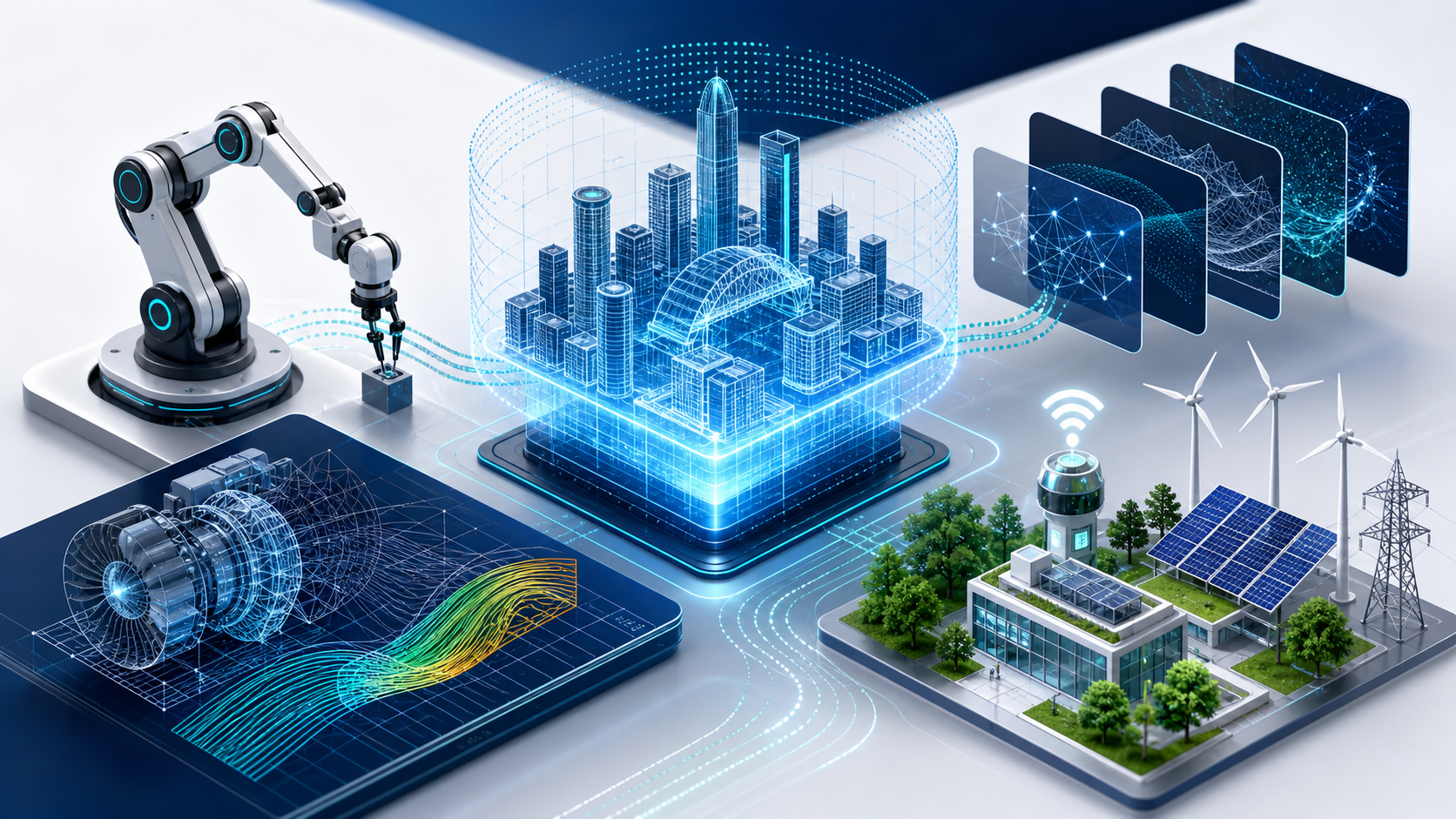
Artificial Intelligence is rapidly transforming the modeling, simulation, optimization, monitoring, and control of engineering systems and robotics. Advances in machine learning, signal and image processing, digital twins, scientific computing, and autonomous systems are enabling new approaches to solving complex challenges in engineering, energy, healthcare, and smart infrastructure.
The workshop encourages interdisciplinary contributions that combine AI with computational engineering, measurement data processing, robotics, digital twins, healthcare technologies, energy systems, and intelligent infrastructure. It is designed as a meeting point for academic research, engineering practice, and technology development aimed at reliable, efficient, and sustainable engineering solutions.

Objectives
An international workshop for applied AI in engineering and robotics
AIMESaR-2026 aims to foster collaboration between academia and industry while highlighting innovative methodologies and practical applications.
Advance intelligent robotics, autonomous systems, and smart technologies for real-world settings.
Encourage digital twins, scientific computing, and data-driven engineering approaches.
Explore AI solutions for healthcare technologies, sustainable energy, and smart infrastructure.
Facilitate exchange between researchers, industry professionals, and technology developers.
Support AI technologies that address sustainable development and societal well-being.
Target Audience
For researchers, engineers, practitioners, and graduate students
The workshop is intended for participants working in Artificial Intelligence, engineering modeling and simulation, signal and image processing, robotics, digital twins, scientific computing, healthcare technologies, sustainable energy systems, and smart infrastructure.

Developing AI-based methods for engineering and robotics.
Applying modeling, simulation, optimization, signal and image processing, monitoring, or control methods.
Working on intelligent, autonomous, and adaptive technologies.
Seeking an interdisciplinary workshop for AI and engineering systems.
Interested in signal and image processing, digital twins, scientific computing, smart infrastructure, and sustainable technologies.
Topics of Interest
Submissions are invited across AI, engineering systems, and robotics
Contributions may be theoretical, methodological, experimental, or application-oriented. Topics include, but are not limited to, the areas below.
 Modeling and Optimization
AI methods for modeling, simulation, optimization, monitoring and control of engineering systems
 AI Learning Methods
Machine learning, deep learning, physics-informed AI, surrogate models and hybrid computational methods
 Signal and Image Processing
AI-based signal processing, image analysis, computer vision, measurement data processing and sensor data interpretation
 Intelligent Robotics
Robotic perception, manipulation, motion planning, autonomous navigation, human-robot interaction and multi-robot coordination
 Digital twins
Digital twins, cyber-physical systems, scientific computing, sensor fusion and data-driven engineering
 Diagnostics and Reliability
AI-enabled diagnostics, anomaly detection, predictive maintenance, fault detection and reliable decision-support systems
 Smart Energy and Embedded AI
Edge AI, IoT systems, smart sensors, IoT systems, energy systems and real-time engineering data processing
 Sustainable and Biomedical Applications
AI-based solutions for healthcare technologies, biomedical systems, sustainable engineering and societal well-being.
Important Dates
Key deadlines for AIMESaR-2026
Dates follow the workshop and EUSPN-2026 schedule. Authors should plan submissions and final manuscripts according to the deadlines below.
| Deadline | Date |
|---|---|
| Workshop Proposals Due | June 10, 2026 |
| Papers Submission Due | August 1 |
| Authors Notifications | August 21, 2026 |
| Final Manuscript Due | September 18, 2026 |
| EUSPN 2026 | October 28, 2026 – October 30, 2026 |
Paper Submission & Publication
Original research papers are welcome
Accepted papers will be published in the Elsevier Procedia Computer Science open-access series (Scopus).
Authors are invited to submit original research papers presenting theoretical results, methods, systems, case studies, and practical applications related to the workshop topics.
At least one author of each accepted paper must register for the conference and present the work at the workshop.
Contact
Chief organizers
For organizational questions, please contact the AIMESaR-2026 chief organizers from Satbayev University.
Technical Program Committee
Tentative list of TPC members
The committee includes international researchers and experts in AI, engineering systems, signal and image processing, robotics, digital twins, and scientific computing.
Aidarkhan KALTAYEVSatbayev University, Kazakhstan
Aidyn AITZHANNVIDIA, USA
Azamat YESHMUKHAMETOVNazarbayev University, Kazakhstan
Bakytzhan ASSILBEKOVMukhtar Auezov South Kazakhstan University, Kazakhstan
Daniar AIZHULOVSatbayev University, Kazakhstan
Gaukhar RAMAZANOVASatbayev University, Kazakhstan
Gulnur KAZBEKOVAAkhmet Yasawi International Kazakh-Turkish University, Kazakhstan
Jacek CIESLIKAGH University of Krakow, Krakow, Poland
Kaleriya MOROZDon State Technical University, Russia
Koichi KoganezawaSDU, Kazakhstan
Madina TUNGATAROVASatbayev University, Kazakhstan
Naci GENCYalova University, Turkiye
Olivier BOTELLAUniversite de Lorraine, Nancy, France
Perizat RAKHMETOVASatbayev University, Kazakhstan
Sagyn OMIRBEKOVNazarbayev University, Kazakhstan
Uzak ZHAPBASBAYEVSatbayev University, Kazakhstan
Yanwei WANGNazarbayev University, Kazakhstan
Yeldos ALTAYSatbayev University, Kazakhstan
Yerzhan BELYAYEVAl-Farabi Kazakh National University, Kazakhstan
Yoann CHENYUniversity of Lorraine, Nancy, France
Zhanibek ISSABEKOVSatbayev University, Kazakhstan